Between 1842 and 1895, seventeen direct ancestors of my father, John Aloysius Gibson (1927-1983), came to the Richmond River as convicts or free settlers, or were born on the Richmond as the children of these newcomers, and all but one stayed. Their graves are scattered through the cemeteries of towns up and down the river. Many of them traveled the globe before reaching the river valley that would be their final resting place. My father was born, lived and died in Kyogle, a small country town on the Upper Richmond River.
How and why does a family become entangled with a place? It’s like my ancestors’ feet sank into the silty mud at the bottom of a bend in the Richmond and took root. How did my paternal ancestors think about the place that they made into a home? What was the significance of that understanding of place for the original owners of the land, the Bundjalung?

This story begins with two convicts. Australia was not their home of choice but, within the limited choices available to men like them, they chose the Richmond River Valley. George Cooper was on the first boat of cedar-cutters to enter the Richmond River in 1842. Morgan Madden got his certificate of Freedom in 1850 and came to The Falls, now known as Casino. Four generations later my father was born in Kyogle.
The Gibson ancestors’ ideas of place were pastoral, relational and religious which is to say they came to the Richmond to farm, make a home for their families, and share in the life of a God they believed created the Richmond. Their pastoralism was oriented to commerce not subsistence. Their idea of home was family-centred rather than place-centred. Their God was understood in terms of the imagery of settled agriculture—‘the Good Shepherd’.
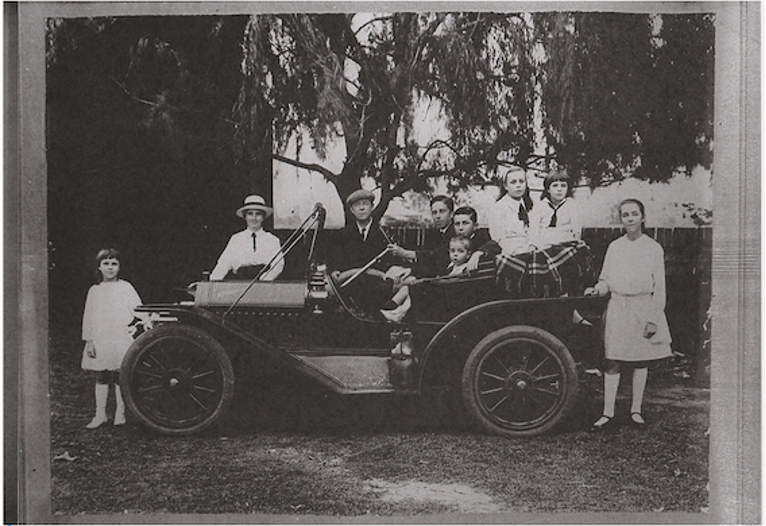
The Gibson ancestors’ ideas of place may be understood as a ’social imaginary of place’, a background understanding about the right use of land. It had ancient biblical elements and modern elements tied to beliefs about progress. It excluded the possibility of the Bundjalung continuing their occupation of the lands of the Richmond River.
My father’s ancestors imagined both a promised land and a land full of promise. In this account of their struggle to realise those promises, there are stories of longing, poetry, prayer, estrangement, and unrequited love. There are stories of sawing, milking, dressmaking, mechanical invention, success and failure.
With the cloth of promise and the shards of reality, my father’s ancestors made a home and identity on the Richmond.
Imagining a Promised Land— Gibson Ancestors’ Ideas of Place on the Richmond River 1842–1925 documents five generations of Scottish, English and Irish convicts and free settlers/invaders and the home they made on the Richmond.
 Writing Things
Leave a comment