What happens when a group of Galibal men encounter four Scottish brothers on the frontier between European and Aboriginal cultures on the Upper Richmond River in the 1840s? Would there be violence or friendship? Exchange or theft? The Scottish brothers wrote letters home of which sixteen survive. The letters give us a window on their encounter with the Galibal, the owners of the land on which the Scotsmen were building Ettrick Station.
The letters give a moment-in-time account of how we humans encounter people who are not like us—’the other’—and the motives, interests and prejudices that push us towards and away from each other. A Hair Rope for a Silver Watch-Guard tells the story of this encounter in five acts.
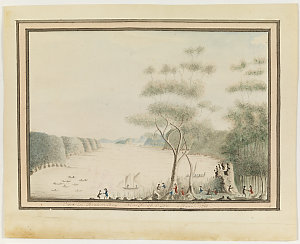
The four Scottish brothers were Barkers: John, Robert, Bryce, and a fourth whose name begins with A. They settled/invaded the Upper Richmond River in Northern New South Wales and established Ettrick Station. They wrote home describing the land, the state of their sheep, their problems finding workers, their food, clothes, health and daily routines. Woven through their letters are stories of their encounters with the Galibal.
There were violent clashes elsewhere on the Richmond in the 1840s but these are only hinted at in the Barkers’ letters. By contrast, the Barkers seem to have developed a rapport with their curious but unwilling hosts. While they never questioned their right to be on the land of Galibal, the Barkers seemed to have no desire to push the Galibal away, and the Galibal seemed willing to find an accommodation with the newcomers. The younger two brothers, Robert and Bryce, were open to learning hunting and building skills.
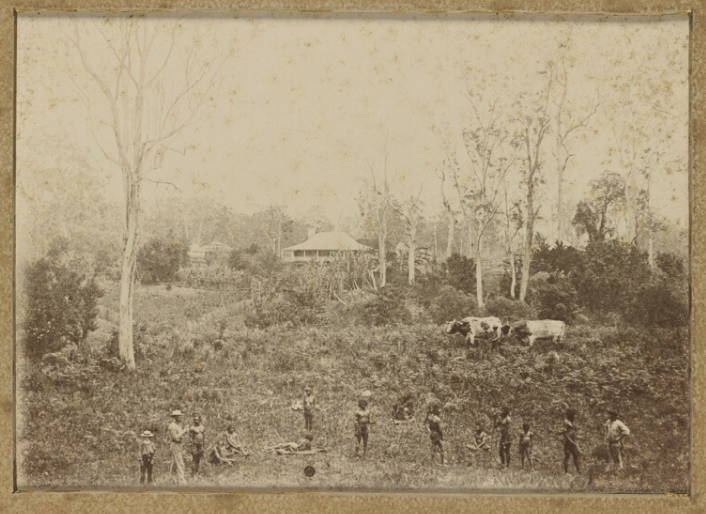
In February 1845, the twenty-something-year-old Robert wrote home about how one of the Aboriginal men wanted to trade the rope of hair he wore about his waste for Robert’s silver watch-guard. The following article, A Hair Rope for a Silver Watch-Guard, explores what this interaction might have meant for the two men who were encountering each other across a deep language and cultural divide.
This is a telling moment in our history when curiosity and accommodation were evident and the men were prepared to test the boundaries of their shared humanity.

 Writing Things
Leave a comment